Should you hire a live band or a DJ for your wedding? Here’s my bias on the table before we start: I’m a musician. I play weddings in Denver for a living. If you’re asking me to be neutral about whether live music is special, I can’t be — I’ve spent my whole career on the live side of this question. So this isn’t going to pretend I have no horse in the race.
What I can do is give you the genuinely fair version, because I’d rather you book the right thing than book me. I’ve played enough weddings to watch both formats succeed and both fail, and I know exactly which couples should hire a DJ and not think twice about it. A DJ is a fantastic, professional, often smarter choice for a lot of weddings. By the end of this you’ll know which camp you’re in — and you’ll also know about the hybrid most couples don’t realize is on the menu, which is usually the best answer of all.
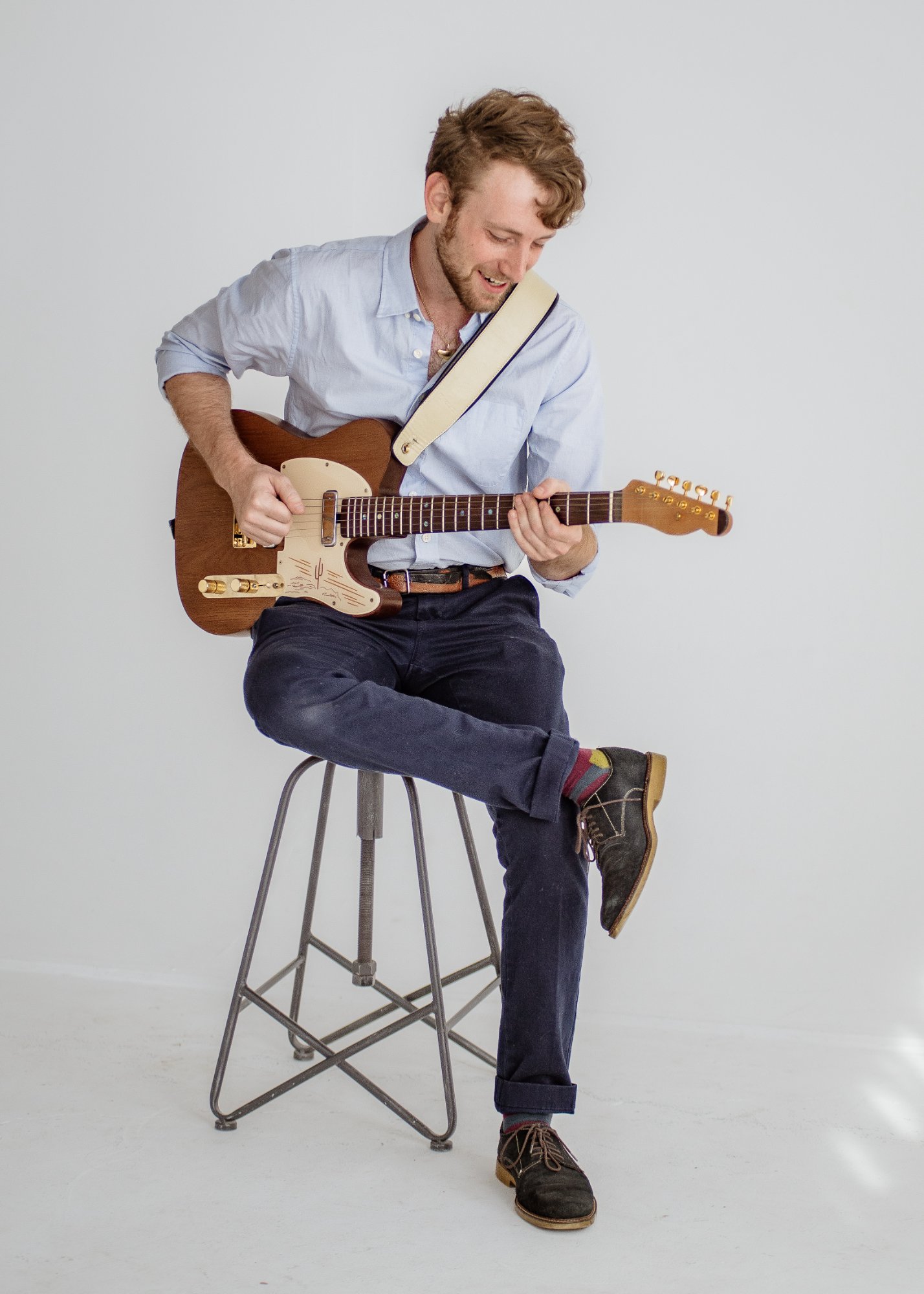
I’m Jordan Lovinger, a guitarist, bassist, and vocalist based in Denver. I’ve performed for couples at mountain venues and for clients like the Denver Art Museum and NBCUniversal. Let’s compare honestly. All prices are in US dollars.
The Honest Cost Reality
There’s no soft way to say this, so I won’t: a DJ is cheaper than live music, usually by a lot. That’s not a knock on either one — it’s just math. A DJ is one person and a sound system. A band is multiple humans, each with their own afternoon, gear, travel, and rehearsal time.
The national numbers make it concrete. According to The Knot’s Real Weddings Study, the average wedding DJ runs about 1,800, while the average live wedding band runs about 4,500 — roughly 150 percent more. Broader pricing guides put DJs in the 1,000 to 2,500 range for four to six hours of ceremony-and-reception coverage, and full live bands anywhere from 2,500 for a small acoustic group up to 10,000 or more for a big show band. A common planner rule of thumb: budget around 5 percent of your total wedding for a DJ and up to 15 percent for live music.
On my side of it, here’s where I actually land, because published numbers beat vague ones. A solo wedding ceremony starts from 330. Cocktail hour runs 165 solo, 330 for a duo, 475 for a trio. Travel adds 35 to 60 within the Denver metro, doubled for trio. Full reception coverage is a custom quote built from your timeline. You can see the complete breakdown in my wedding guitarist cost guide for Denver, and the full packages live on the weddings page.
Notice something in those numbers: solo and small-ensemble live music doesn’t have to mean show-band money. A solo ceremony plus cocktail hour can land in the same neighborhood as a quality DJ. The 4,500 average is for a full reception band playing the dance party — a different job than tasteful live music for the parts of the day that aren’t about the dance floor. Which is exactly the door the hybrid walks through. More on that below.
Energy and Atmosphere
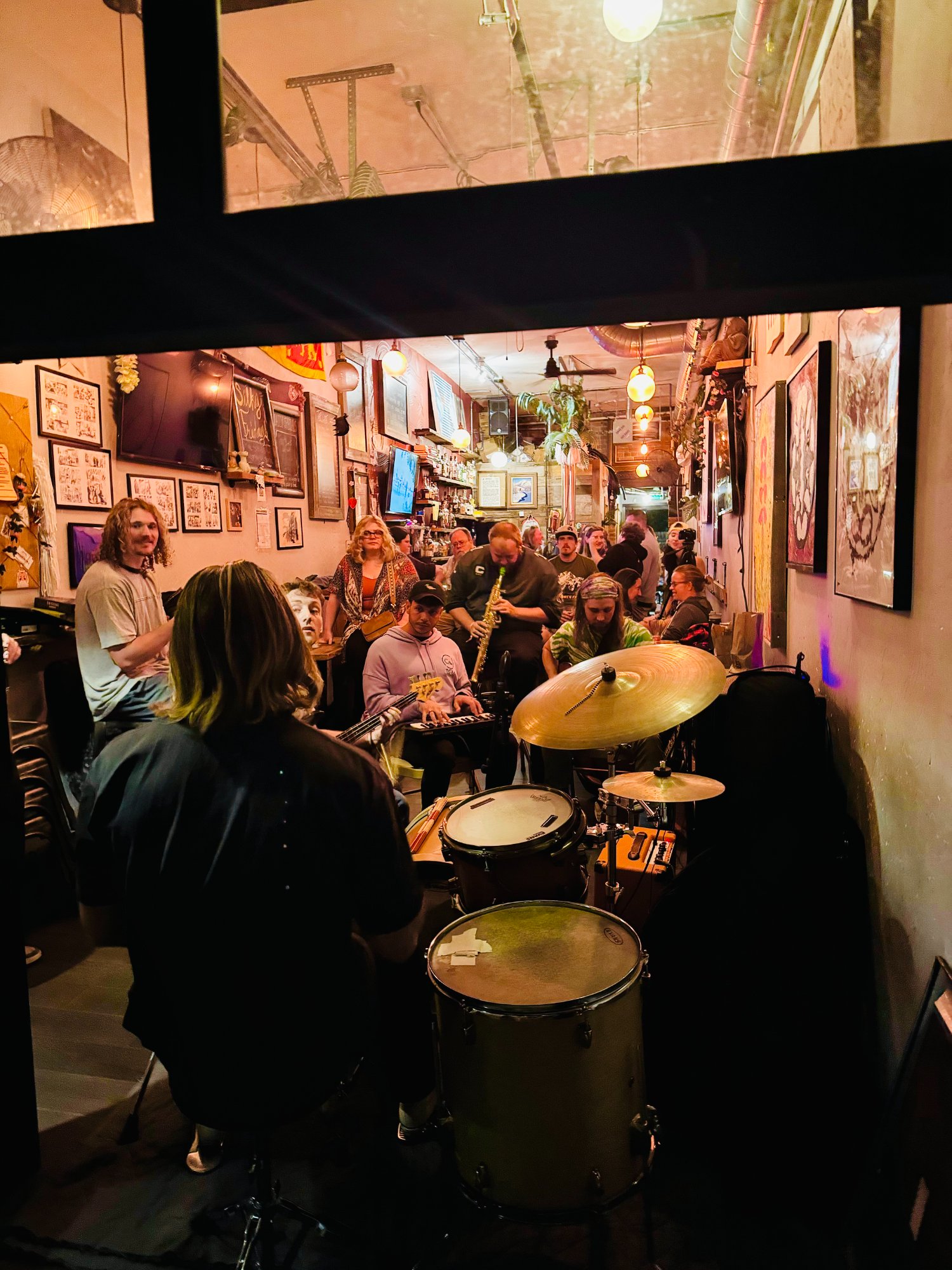
This is the part where my bias is real, so weigh it accordingly: a live musician changes the feel of a room in a way a recording can’t. People watch hands move. They feel the air from a real instrument. When your processional is played live — when the person walking down the aisle is walking to a human making that sound right then — there’s a charge to it that a track, however perfect, doesn’t carry.
But here’s the honest counterweight, and it matters: for the late-night dance party, that live-versus-recorded gap narrows fast, and sometimes flips. A DJ can play the exact studio recording your guests know by heart, beat-mixed so the energy never drops between songs, pulling from every genre and decade in one seamless set. A band covering those same songs is doing an interpretation — often a wonderful one, but an interpretation. If what you want at 10 PM is the actual hits, played note-for-note, with zero gaps, a great DJ is hard to beat. Live shines brightest in the intimate, emotional stretches; recorded music shines brightest when the dance floor wants relentless, familiar momentum.
Song Flexibility and Requests
This one genuinely cuts in the DJ’s favor, and I won’t pretend otherwise.
A DJ can play essentially any song ever recorded, instantly, including the deep cut your cousin shouts out at 11 PM. Requests are a two-minute lookup. Genre-hopping is effortless. If your guest list spans grandparents who want Sinatra and friends who want current pop, a DJ serves all of them from the same laptop without breaking stride.
A band’s repertoire is finite. We learn what we learn. A good musician will happily prepare a few special requests in advance — your first dance, your processional, a song that means something — and arranging those is some of my favorite work. But a band can’t pivot to an unrehearsed request on the spot the way a DJ can, and building a wide, multi-genre song list takes real rehearsal hours. If on-demand variety and surprise requests are high on your list, that’s a point for the DJ, full stop.
Space, Logistics, and Volume Control
The practical stuff couples underestimate until load-in day.
Footprint. A DJ needs a table and a couple of speakers. A band needs room for people and gear — a trio is manageable, a five-piece is not. If your venue is tight, or your ceremony spot is a small garden, that’s a real constraint. (For what it’s worth, my solo and duo setups are deliberately compact — a 4-by-4-foot space and a quiet 15-minute setup — precisely because so many ceremony spots are small.)
Power and sound. Both need power and decent acoustics, but a band has more to plug in and more that can go sideways. A solo or duo act is closer to a DJ in simplicity than a full band is.
Volume control. This is underrated. A DJ can dial the volume from background-dinner to full-club with a fader. A live band has a natural floor — drums and amps only get so quiet — which is exactly why live music for dinner and cocktail hour tends toward solo or duo (easy to keep conversational) while the loud, full-band sound is saved for when people actually want to dance. Matching the format to the volume the moment needs is most of the art here.
Quick Comparison
| Factor | Live Band / Musician | DJ |
|---|---|---|
| Typical cost | Higher — solo ceremony from 330; full reception band national avg ~4,500 | Lower — national avg ~1,800 |
| Atmosphere | Unmatched for live, emotional moments | Polished, consistent, great for dancing |
| Song range | Finite, rehearsed repertoire | Virtually unlimited, instant |
| Requests | A few, prepared in advance | On-demand, almost anything |
| Dance-floor energy | Interpretation of the hits | Original recordings, seamless mixing |
| Space needed | More (solo/duo modest; full band large) | Minimal |
| Volume control | Natural floor; manage by ensemble size | Fully adjustable |
| Setup complexity | Higher for full band | Lower |
The Best of Both: The Hybrid
Here’s the option most couples don’t know exists, and it’s the one I recommend more than any other — even though it means I only play part of your day.
You don’t have to choose. The smartest weddings I play split the day by what each moment actually needs: live music for the meaningful, intimate stretches, and a DJ for the late-night dance party.
In practice that looks like live solo or duo guitar — jazz, bossa nova, gentle vocal standards — for the ceremony and cocktail hour, when guests are arriving, mingling, and feeling the emotional beats of the day. That’s where live performance does its best work: present, warm, conversational, photographable. Then, when dinner ends and it’s time to fill the floor, the DJ takes over with the original recordings, the seamless mixing, the limitless request list, and the volume control that a dance party lives on.
You get the live-music magic exactly where it lands hardest and the DJ’s strengths exactly where they land hardest — usually for less than a full reception band would cost, since the live portion is a solo or duo for a couple of hours rather than a five-piece all night. I do the ceremony-and-cocktail-hour live piece all the time; the weddings page lays out those packages, and they bundle (book ceremony and cocktail hour together and save 10 to 20 percent depending on ensemble size). If you want help thinking through which songs suit a live ceremony versus a DJ dance set, I wrote up ideas in wedding ceremony and cocktail hour song ideas.
This isn’t a compromise. For most couples, it’s the actual best answer.
A Decision Framework
Skip the abstractions. Find your situation.
Hire a DJ if: your budget is tight, your top priority is a packed dance floor playing the exact hits everyone knows, your guest list spans wildly different music tastes, your venue is small, or you want one vendor covering the entire day from ceremony to last call simply and affordably. None of that is settling. A great DJ throws a great wedding.
Hire live music if: atmosphere and a sense of occasion matter most to you, you love the idea of your ceremony and cocktail hour feeling handcrafted and present, you want the unmistakable charge of real instruments during the emotional parts of the day, and your budget has room for it. The intimate, mingling stretches of a wedding are where live music earns its premium.
Go hybrid if: you want both and you’re being honest about where each format shines — which describes more couples than either pure camp. Live for the ceremony and cocktail hour, DJ for the dance party. It’s my most common recommendation because it’s usually the right one.
And if you’re weighing the live side against the overall budget, my Denver wedding music cost guide has the real numbers, and a broader look at live music cost for Denver events covers the non-wedding side too.
Frequently Asked Questions
Is a live band or DJ better for a wedding?
Neither is universally better — they’re better at different things. A DJ excels at an affordable, high-energy dance party with unlimited song variety and instant requests, while live music excels at atmosphere and emotional impact during the ceremony and cocktail hour. The best choice depends on your priorities and budget, and many couples get the most out of a hybrid: live music early, DJ for the late-night dancing.
Is a DJ cheaper than a live band for a wedding?
Yes, almost always. The national average wedding DJ runs about 1,800 versus roughly 4,500 for a full live band, and DJs need less gear, space, and personnel. That said, a solo or duo live act for the ceremony and cocktail hour can cost far less than a full reception band — my solo ceremony starts from 330 — which is why the hybrid is often more affordable than people assume.
Can you have both a band and a DJ at a wedding?
Absolutely, and it’s one of the smartest setups out there. A common and cost-effective version is live solo or duo music for the ceremony and cocktail hour, then a DJ for the reception dance party. You get the live-music magic where it matters most and the DJ’s seamless dance energy and unlimited request list when the floor fills up.
Does a live band need more space than a DJ?
Generally yes. A DJ needs only a table and a couple of speakers, while a full band needs room for several musicians and their gear. Solo and duo live acts, though, are much closer to a DJ in footprint — my setups fit a 4-by-4-foot space with a quick, quiet setup — so a tight venue doesn’t automatically rule live music out.
How much should I budget for wedding music?
Planners commonly suggest around 5 percent of your total wedding budget for a DJ and up to 15 percent for live music. On a typical wedding that’s roughly 1,800 for a DJ versus up to 5,400 for a full band. A live ceremony and cocktail hour with a solo or duo can land well under that band figure while still giving you live performance for the day’s most emotional moments.
Trying to decide for your own Denver wedding? Tell me your date, venue, and what kind of day you’re picturing on the weddings page, or get a real quote and I’ll help you figure out whether live, DJ, or a hybrid fits your day best — even when the honest answer is that you only need me for part of it.